

Inquiry-Based Learning
The Four Languages Framework
Core Concept
At Huadong, the word “language” refers to more than spoken or written language. It represents a systematic way of understanding the world, building knowledge, and expressing ideas.
In an era shaped by artificial intelligence, global challenges, and interdisciplinary careers, students need to develop four essential languages:
Computational Language · Academic Research Language · Intercultural Language · Design & Innovation Language
Together, these four languages enable students to understand complex issues, express informed perspectives, create new possibilities, and take meaningful action.
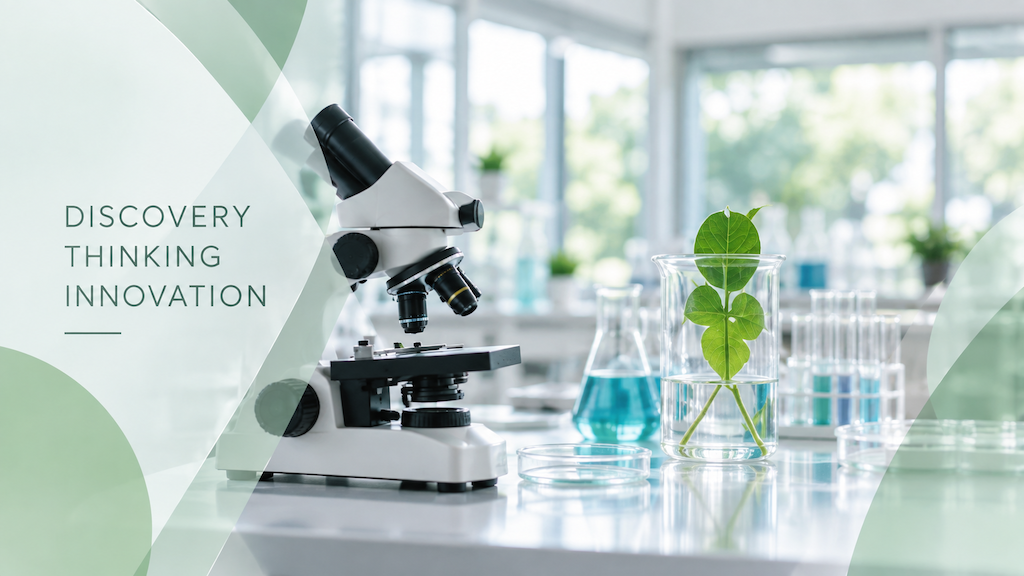
The Four Languages
Computational Language
Learning Areas
Coding · AI Literacy · Data Science · Robotics
Capabilities Developed
Computational thinking, data analysis, model building, and the ability to evaluate and use AI tools effectively.
Academic Research Language
Learning Areas
Research Methods · Academic Writing · Project-Based Research
Capabilities Developed
Questioning, evidence gathering, argumentation, academic communication, and research ethics.
Intercultural Language
Learning Areas
English Education · Additional Languages · Global Issues
Capabilities Developed
Intercultural understanding, international communication, multiple perspectives, and global literacy.
Design & Innovation Language
Learning Areas
Design Thinking · Entrepreneurship · Maker Education
Capabilities Developed
Creative ideation, prototyping, iteration, entrepreneurship, and practical implementation.
A Shared K–12 Learning Language
The Four Languages Framework provides a common foundation for curriculum development across the school.
Each division designs age-appropriate learning experiences while working toward four shared student capabilities:
Understand · Express · Create · Act
From Kindergarten through Senior High School, students progressively develop the tools to explore questions, communicate ideas, design solutions, and engage meaningfully with the world.


Building a K–12 Inquiry Framework
At Huadong, inquiry skills are developed progressively across the K–12 journey.
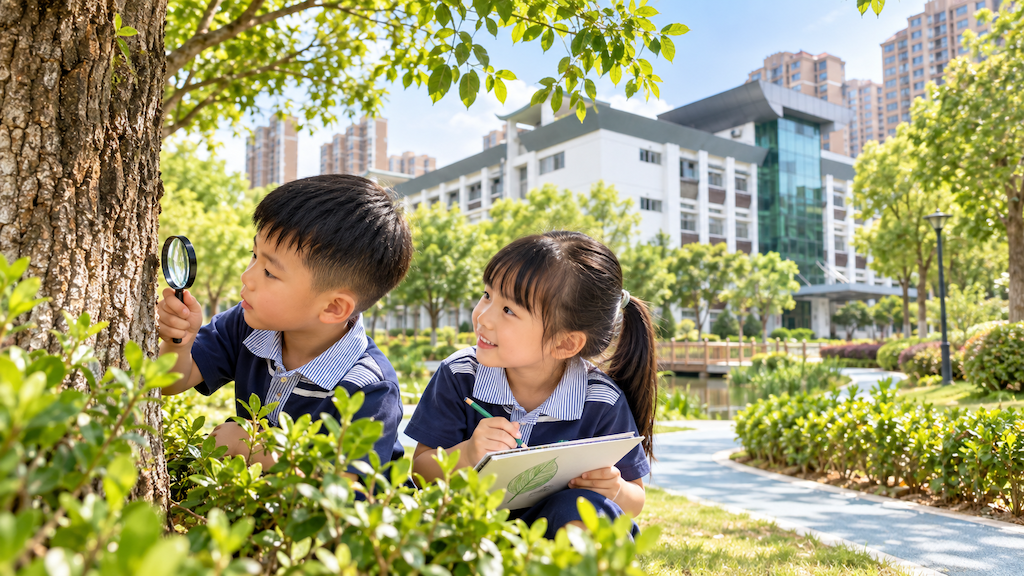
Students move from curiosity and observation in the early years to questioning, reading, information gathering, research methods, data analysis, interdisciplinary inquiry, academic research, writing, and formal presentation.
K–12 Inquiry Learning Progression
| Learning Stage | Key Capabilities | Learning Outcomes |
|---|---|---|
| Kindergarten | Observation, curiosity, oral expression, exploration of everyday life | Thematic exploration, visual documentation, and oral sharing |
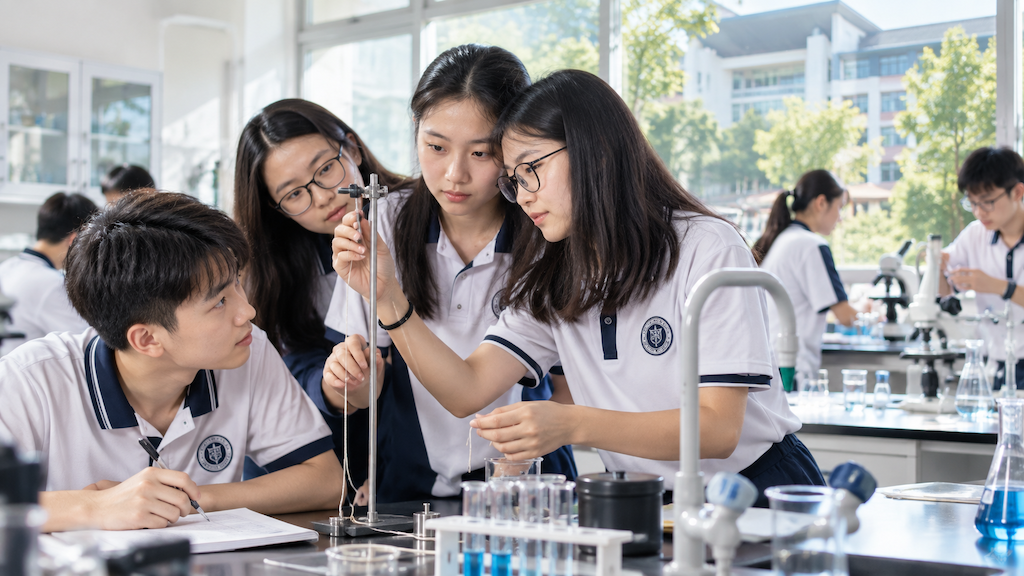
| Elementary School | Questioning, reading, information gathering | Short thematic reports, reading presentations, and basic data organization |
| Junior High School | Research methods, data analysis, interdisciplinary inquiry | Interdisciplinary projects, data visualizations, research posters, and presentations |
| Senior High School | Academic research, research writing, project presentation | Learning portfolios, research papers, formal research presentations, and public showcases |
| Learning Stage | Kindergarten |
|---|---|
| Key Capabilities | Observation, curiosity, oral expression, exploration of everyday life |
| Learning Outcomes | Thematic exploration, visual documentation, and oral sharing |
| Learning Stage | Elementary School |
|---|---|
| Key Capabilities | Questioning, reading, information gathering |
| Learning Outcomes | Short thematic reports, reading presentations, and basic data organization |
| Learning Stage | Junior High School |
|---|---|
| Key Capabilities | Research methods, data analysis, interdisciplinary inquiry |
| Learning Outcomes | Interdisciplinary projects, data visualizations, research posters, and presentations |
| Learning Stage | Senior High School |
|---|---|
| Key Capabilities | Academic research, research writing, project presentation |
| Learning Outcomes | Learning portfolios, research papers, formal research presentations, and public showcases |
From Curiosity to Research
Our goal is not simply for students to find answers.
We want them to learn how to ask meaningful questions, gather evidence, analyze information, connect ideas across disciplines, and communicate what they discover.
Through a coherent K–12 inquiry pathway, students gradually grow from curious explorers into independent researchers and confident creators of knowledge.
Ask · Explore · Research · Create · Share